Loopback reads every ticket, call transcript, and app review the day it comes in, tags what it's really about, and rolls it up into themes your roadmap should already reflect.
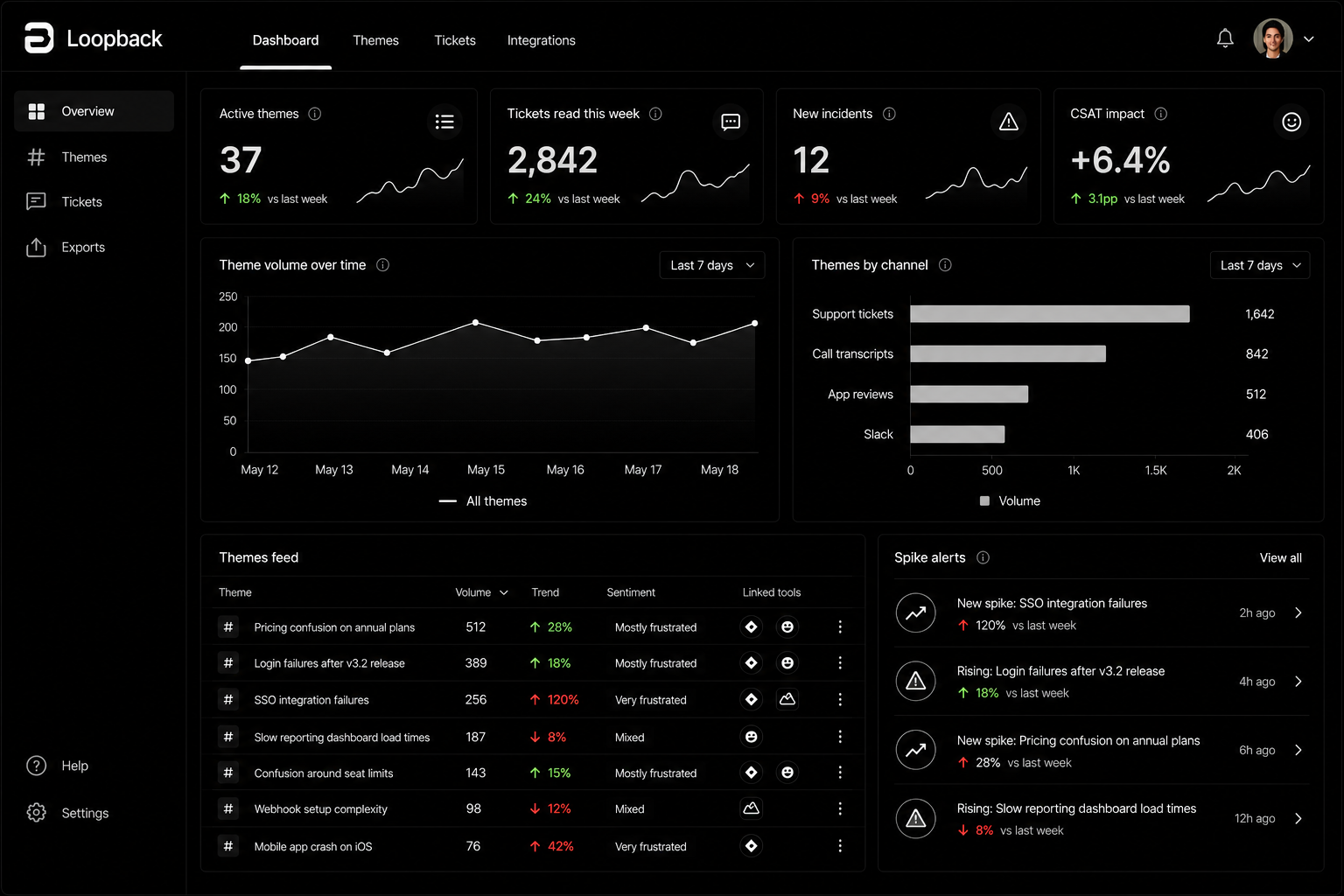
Support hears every broken integration, confusing release, and pricing edge case. But by the time it reaches product, it's a quarterly summary nobody reads instead of a live feed of what's actually breaking.
How it works
Loopback plugs into existing CCTV, entry counters, and Wi-Fi or beacon data already installed in the venue. No new hardware to mount.
Loopback classifies intent, sentiment, and product area for each ticket or call segment, the moment it lands.
Loopback turns those counts into a suggested rate per zone and time slot, so quotes are backed by numbers a client can check.
Product
Every ticket is classified by product area, intent, and how frustrated the customer sounds, without a rules engine to maintain.
Loopback groups related conversations into named, trackable themes instead of leaving you with a wall of individual tickets.
When a theme grows faster than usual—a real incident, a confusing release, a broken integration—your team hears about it same-day.
Attach themes directly to items in Linear or Jira, so every ticket behind a decision stays one click away.
Pull tagged conversations and theme data into your own warehouse or BI tool whenever you need to go deeper.
Weekly digest
Instead of one flat rate, Loopback maps expected traffic across the hours a screen or panel is live, so a 6 to 8pm slot at the main entrance can be quoted at what it's actually worth, and a slow 11am slot doesn't get priced the same way.
Theme volume this week
Pricing
Loopback processes footage to produce anonymized movement and headcount data per zone. No facial recognition, no identity matching, and no images are stored after processing. The output is numbers, not people.
We'll walk through a sample themes feed using data close to your product. No credit card, just a realistic picture of what Loopback would surface in week one.